


Join Stephanie McSpadden Rowlan for this guest blog entry about what her recent study abroad experience in New Zealand was like! Stephanie is a student of Botany in the College of Agricultural Sciences with OSU's Ecampus. Stephanie also was awarded the Gilman Scholarship for study abroad, which helped her offset the cost of her faculty-led two-week trip to New Zealand in fall 2024. Read on to find out more about Stephanie's experience!
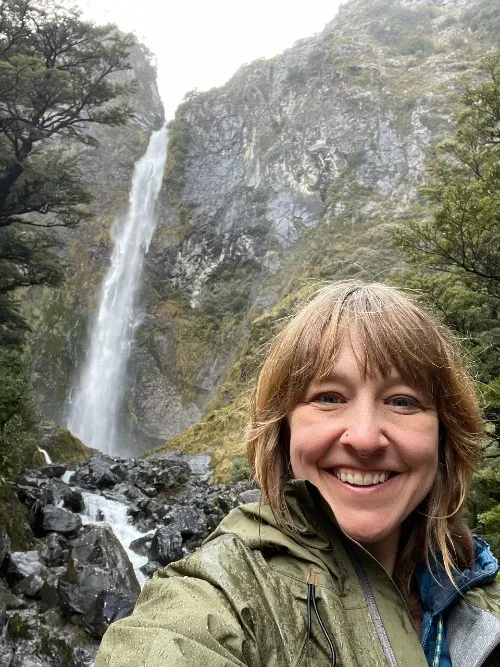
This past September, I was able to travel with Oregon State University to New Zealand, an opportunity I thought was far out of reach for me financially. The two-week, faculty-led trip is called “Land of the Long White Cloud: Ecosystems of New Zealand.” It is an opportunity to travel to both major islands of New Zealand, see beautiful sights and hear from many different voices in the forestry industry. There were also some fun side trips such as traveling to “Middle Earth” and an unforgettable night tree walk.
Luckily, I heard about the Gilman Scholarship for students who would like to study abroad. I learned that Gilman, a scholarship run through the US Department of State’s Bureau of Educational and Cultural Affairs, offers awards of up to $5,000 towards any study or intern abroad program of a student’s choice. As an award meant to offset the cost of study abroad, I learned that I could use this award not just to pay for tuition expenses but also for other things like airfare or transportation costs. I was nervous about the application process as there is a requirement to turn in three essays to apply.
I quickly found out there is a department at OSU eager to help with guidance for essays such as these. Rebecca Otto, the National and Global Scholarships Advising Coordinator at Oregon State University, read over my essays and discussed what Gilman was looking for. The prompts provided through her department and provided by Gilman allowed me to ponder why I wanted to go on this study abroad trip and how this could better serve me in my future career. The most impactful idea I pulled from this scholarship process is how much I want to gain scientific knowledge from a variety of cultures in my future career. I want to challenge our ideas that western scientific thought is the only way to conceptualize our world. In the end, all of that hard work paid off. I received the Gilman Scholarship, and, ultimately, I felt supported through the whole process. I understand tackling even one essay for a scholarship can feel like a lot, but having the opportunity to travel internationally makes every bit worth it!
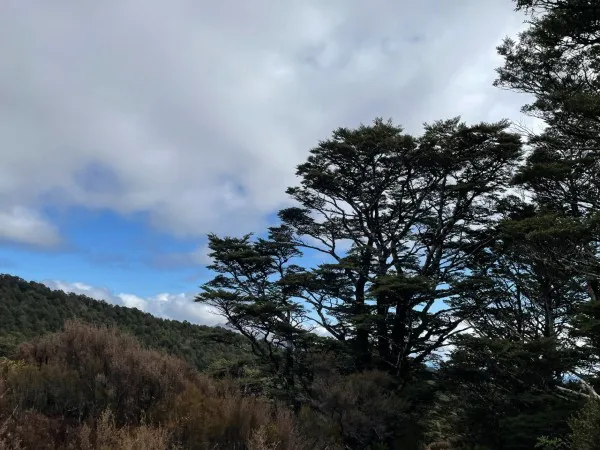
While abroad, we spent some time visiting a variety of ecosystems within New Zealand’s two major islands, including temperate rainforest, temperate forest and alpine. We began the trip in the North Island and saw a large Kauri tree that is endemic to the area. The Kauri tree, Agathis australis, is the largest tree in New Zealand. These trees typically live around 2,000 years. It was aggressively forested for timber usage and for the use of its resin from about 1820-1930. The trees were officially protected in 1987 when Kauri trees were placed under the protection of the Department of Conservation. Today, there are fewer than 2% of the original Kauri-forest left (Department of Conservation, 2019). I was amazed to see the before and after maps of white settlement and how drastically the land was impacted.
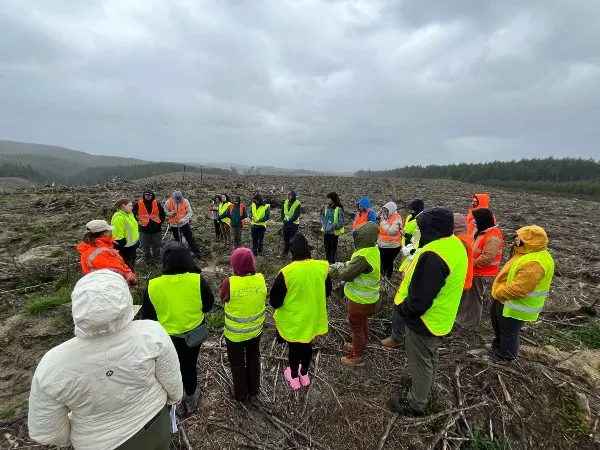
We later spent time with an organization called SCION. This organization specializes in bringing together research that draws ideas from Native populations, the New Zealand government and timber industry leaders to provide products that are sustainable and aim to provide a net zero by 2050 (Scion - Who we are, n.d.). We were shown both a native forest and an industrial forest by this organization. We were able to compare and contrast the two systems. An industrial forest has been planted specifically to grow timber for harvest and for profit. These forests are a monoculture system that is clear cut in sections and replanted. All of the trees in these forests are non-native.
In contrast, a native forest has many layers. There are plants that reside on the floor, mid-level and in the canopy. While we were there, we also spent time at a Maori school where we learned concepts about connectivity and being part of the great family of the planet. Chaz, the school’s representative, spoke to us about how he grew up in a native forest, and his family was able to receive everything they needed from the forest. This speaks to the difference in diversity level between the industrial forest and the native forest. Though, I understand timber is a primary income source for New Zealand today, I could see the loss of resources to the people there and the native species with so many lost acres of native forest.
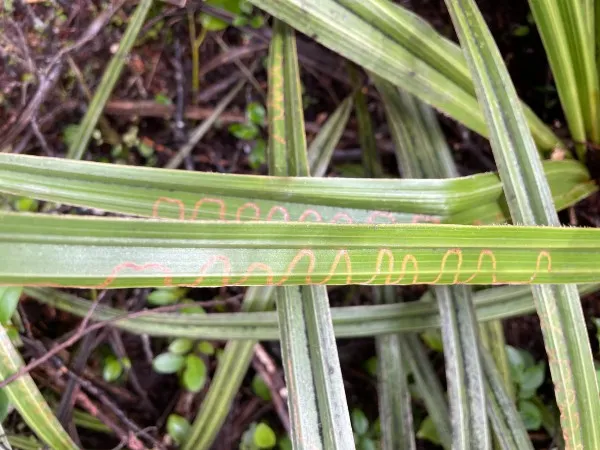
Another outing involved visiting Tongariro National Park. Our primary task there was identifying various plants and considering their environment and other biotic and abiotic factors involved. We noted how at the lower elevations of the park there was a larger variety of plant life. At the higher elevations, there were primarily beech trees, and then as we continued to rise, the trees were no longer present and only grass was present. We spent time specifically identifying plants at the lower elevations, such as the Manuka, Leptospermum scoparium, which grows in regenerative areas. We found it in a highly disturbed area along a walking path. The climate of the area was drier than previous places we had visited so far on the trip and at a higher elevation in general. We also identified a plant called Kakaha, Astelia nervosa, a rhizomatic plant. It is in the herb family and was suffering from mildew coverage. We, also, identified a zig zag pattern across the leaves left there by the astelia zigzag moth.
We travelled to the South Island for the second half of our trip. This portion began at the University of Canterbury. There we were able to participate in two lectures about biosecurity and forest ecology. The major topic that stood out to me in both lectures are the ramifications of introducing non-native species to an ecosystem. One primary example included the introduction of non-native mammals to the island. Many of these are ground predators, such as, domestic cats, rats and weasels. The islands do not have any native ground predators, so many native species evolved to look for predators from above. Birds have keen eyesight, but do not use smell for hunting, like mammals do. Native animals learned to stay still when danger was sensed. This act of staying still and having no hidden scent provides an easy target for ground predators. This contributed to a loss of population and extinction for many native animals. Another example is found with plants. Though the country of New Zealand depends on their timber industry, planting of non-native plants has caused issues. Wilding conifers, such as Douglas fir, (Pseudotsuga menziesii), native to North America and imported in the 1800s for production forestry, can be found in native forests and take over the area quickly. Since Douglas fir seeds spread through wind dispersal, they can be found far from their original planting location. The New Zealand government is spending a great deal of money spraying these non-native transplants. Keeping out non-native species will not only save native populations, but it can also save the government a lot of money and time.

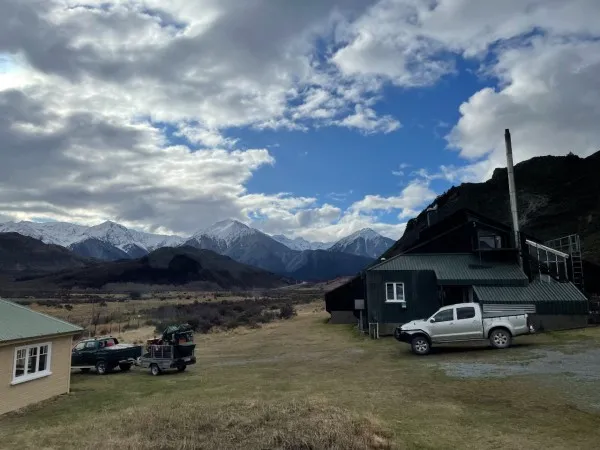
Shortly after our time there, we ventured to two separate research stations. The first was in the mountains of the South Island, and the second was in Westport on the coast. These two locations provided added variety of ecosystems to our tour. The first was dry, mountainous and cold as we were just entering Spring. The mountains were breathtaking and, in my opinion, the most beautiful sights of the whole trip. While there, we identified various plants and sought out signs of invasive mammal species and wilding conifers. We had the opportunity to perform a stand density survey. This was my first time learning to measure a tree and track size within a specific plot. Our team compared our various plots to data from 1977. The data showed there were fewer large diameter beech trees than there were in the 70’s, though there are more trees in general today. This could be due to there being more space for more trees, as they are not crowded out by larger trees currently.
The research station in Westport is one of the wettest areas in New Zealand. Westport receives an average of 81 inches of rain a year. It rained often while we were there and is a temperate rainforest. While there we visited various locations, such as a seal colony and ventured on a walk through the forest. We took time to take in the various components, both biotic and abiotic of this region.
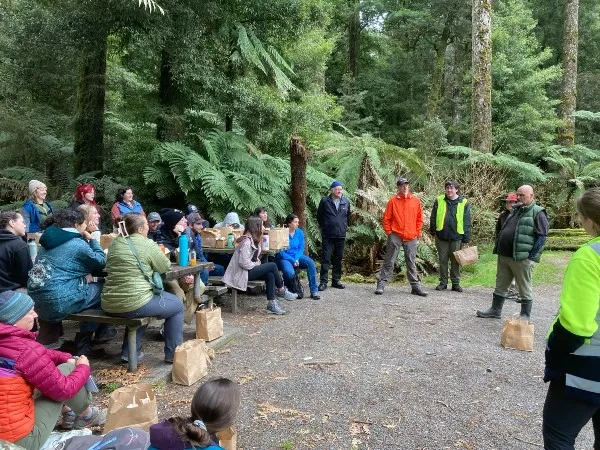
I was able to absorb a lot of knowledge from Chaz, our Maori representative. He spoke about the connectivity of all living beings and how important it is for us to care for others in our ecological family because we all support each other. This challenged me to consider how plants are connected, and how we neglect this connection to further immediate profits within the timber industry. I thought a lot about the monoculture of industrial forests. I wondered if this is sustainable considering the typical lack of sustainability in monoculture systems.
I began a deep dive into the ways trees and other plants connect with fungi and each other to share resources and support the overall network of plants and other organisms. Suzanne Simard shares in her book, “Finding the Mother Tree”, her journey to understanding that birch trees actually keep diseases away from neighboring trees, and the alder feeds excess nitrogen to trees in its area through mycelium networks. She is most famous for discovering the mother tree in a forest. These are the largest trees that look after smaller trees by providing nutrients and teaching them how to survive. It is incredible how so much of forest knowledge centered around ideas of competition for resources, but the system is far more complex and nurturing than we previously thought (Simard et al., 2012).
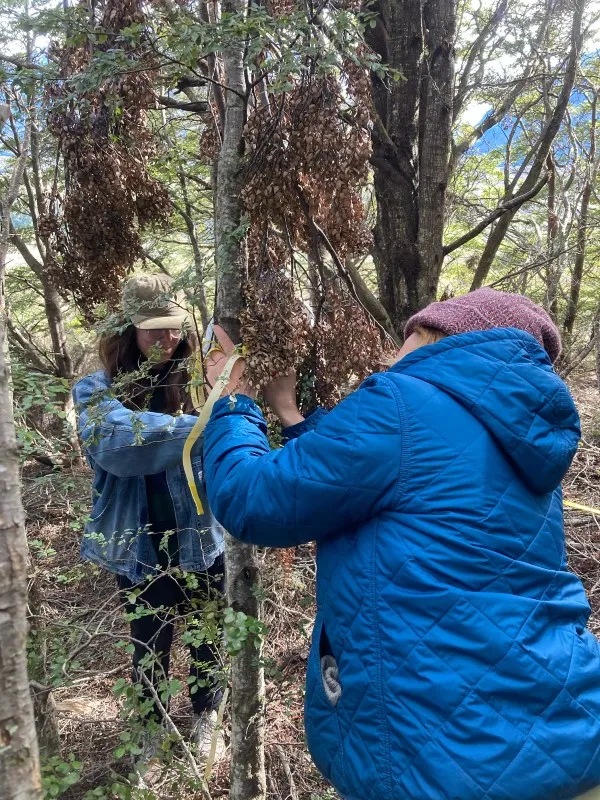
Thinking more about connectivity and learning more about the mycelium network between plants in the forest, furthered my interest in continuing my education and research focus to better understand the mycelium network and how this relates to how plants thrive and communicate. I hope to continue asking questions about this connectivity throughout my career ahead, both within forest ecology and how we are connected across the world.
REFERENCES
Department of Conservation. (2019). Kauri. Govt.nz.
https://www.doc.govt.nz/nature/native-plants/kauri/
Scion - Who we are. (n.d.). Scion Research.
https://www.scionresearch.com/about-us/about-scion/who-we-are
Simard, S. W., Beiler, K. J., Bingham, M. A., Deslippe, J. R., Philip, L. J., & Teste, F. P. (2012).
Mycorrhizal networks: Mechanisms, ecology and modelling. Fungal Biology Reviews, 26(1), 39–60. https://doi.org/10.1016/j.fbr.2012.01.001